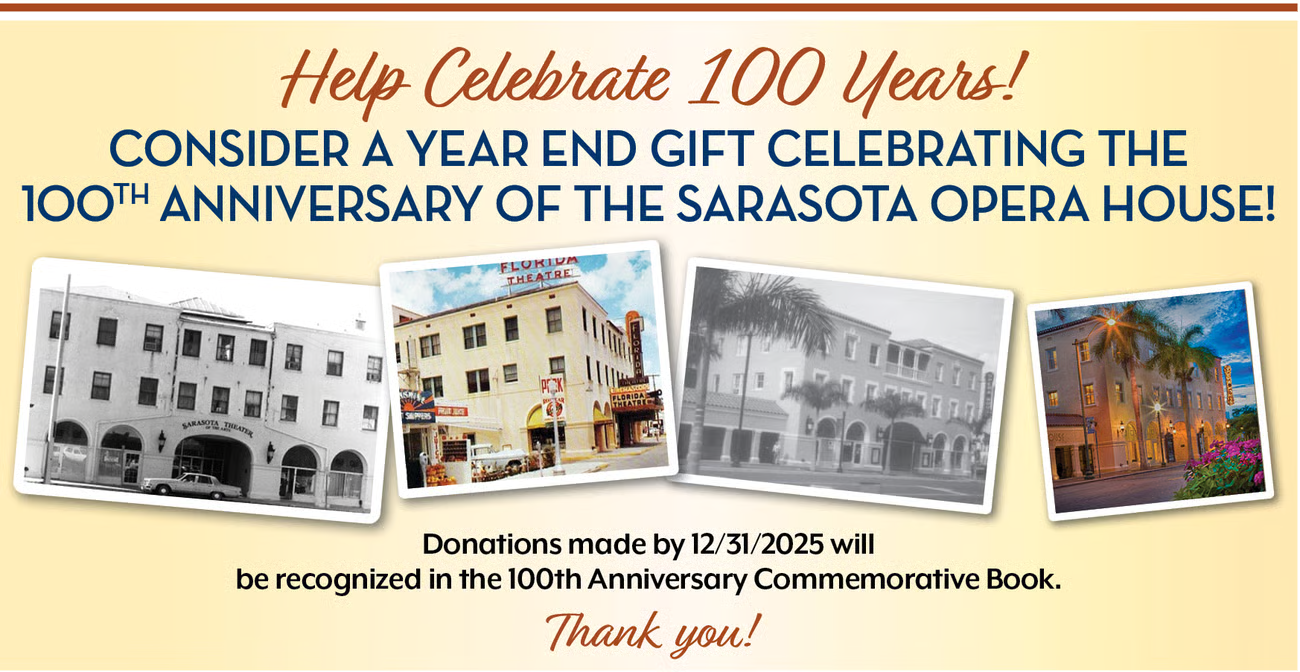
Celebrating 100 Years of the Historic Sarasota Opera House
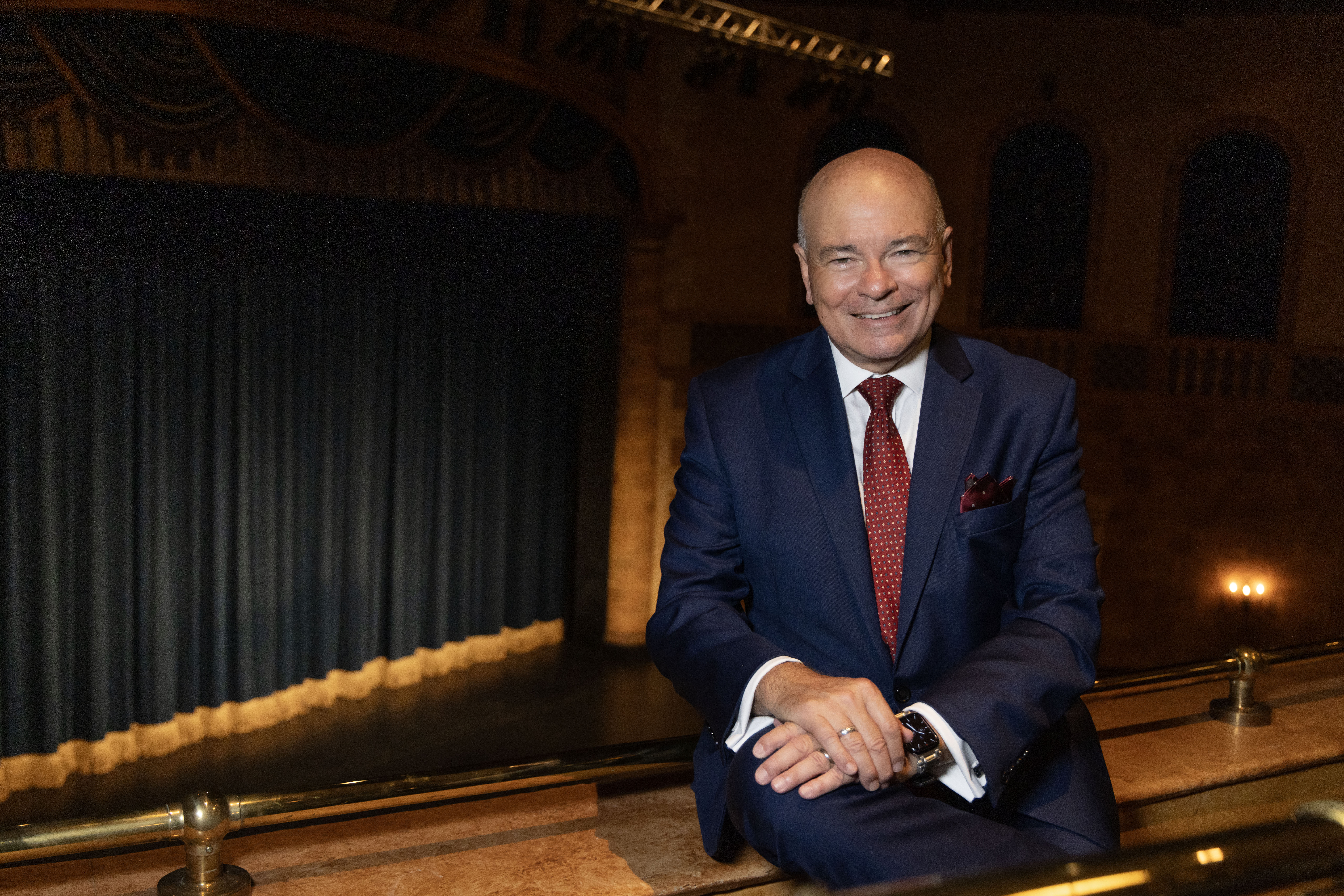
A Message from our General Director
How Sarasota Opera Saved a Theater and Found a Home
By Richard Russell
The Asolo Opera Guild had been giving opera performances since 1960. Utilizing the historic Asolo Theatre at the Ringling Museum, the group presented the touring Turnau Opera Players until 1973 and then mounted their own productions, rehearsed in NYC before moving to Sarasota. Because the venue was intimate with no orchestra pit, the accompaniment was provided by two pianos or a small chamber orchestra.
The opera company shared the space with the Asolo Theatre and as the theatre company grew, it became evident that the opera company would need to find another space. Performances of Carlisle Floyd’s Susannah at the Van Wezel with full orchestra in 1973 only confirmed the company’s desire to grow.
At the same time in downtown Sarasota, it looked like the Florida Theatre’s days were numbered. Opened to great fanfare in 1926 as the Edwards Theatre, a tribute to A.B. Edwards, the man who built it, the theater served several generations of Sarasotans as a place to see first run movies and live entertainment. Sold by Mr. Edwards in the early thirties, sporting a new name, the Florida Theatre featured the best from Hollywood (including the Academy Award winning The Greatest Show on Earth, which was mostly filmed in Sarasota), as well as great entertainers. Tommy Dorsey, Sally Rand, Will Rogers, and most famously, Elvis Presley, had all graced that stage.
But by the late sixties and early seventies, downtown Sarasota was in decline. It was labeled blighted and a slum, and the Florida Theatre was similarly derelict. It closed in 1973 and was a day away from demolition—the wrecking ball already in the parking lot next door—when Duaine and Patricia Glenn bought it for their Radio Engineering Institute (REI) the same year.
The school was housed in the front spaces (currently the lobby and lounges), and the auditorium was used for community theater, church services, and the showing of family-friendly films. Some of the second-floor offices were leased to other tenants, one of which was the Asolo Opera Guild.
Searching for a new home in 1979, the enterprising Deane Allyn, a former showgirl and then president of the Sarasota Opera Society (now the Sarasota Opera Guild), approached the Glenns about buying the theater. They expressed willingness and Deane leapt into action. She contacted the Asolo Opera Guild chair Leo Rogers at his Finger Lakes summer home, and he wired $50,000 as a down payment on the $173,000 purchase price. The Glenns asked for a 3-year lease to continue operations of their school, giving the opera company time to raise money they needed for the renovation.
The company created a competition for designs for the new theater, but the winning design proved unfeasible and beyond the company’s budget. Instead, the Asolo Opera Guild decided to try to preserve the original façade, earning a National Historic Places designation in the process. A support facility would also be needed, so the adjacent parking lot was acquired for a new building now known as the Artists Wing. It provides dressing rooms, offices, and side wing space to support the multiple opera productions the company presented during its winter season.
Ultimately, $3 million enabled the newly-renamed Sarasota Opera Association to accomplish a partial renovation encompassing the new support building, new orchestra pit (housing 45 players), and the orchestra level of the auditorium. It was in this form that the Sarasota Theatre for the Arts was christened on January 21, 1984, with a performance of Tchaikovsky’s Eugene Onegin starring soprano Stephanie Sundine, tenor Jerry Hadley, and baritone Marc Embree. The production was conducted by Victor DeRenzi, then in the second season of his extraordinary 44-year tenure.
There was still work to be done. The theater would soon be renamed the Sarasota Opera House. The balcony of the auditorium needed renovating to be usable. The company’s offices were on the second floor of the lobby with the third-floor apartments used by Sarasota Opera’s apprentice artists. Over the next few years, the singers moved to a purchased apartment building on Second Street, the offices moved to the third floor and new lobby spaces and the Opera Club were created on the second floor. The renovated lobby — complete with a chandelier that was part of the set of Gone with the Wind—was finished in 1995.
All this was achieved with the determination of a small staff and an army of volunteers. Over the next decade, under DeRenzi’s leadership, the quality of performances grew to world-class, and the support of the community burgeoned. And so did the needs of the company. When DeRenzi launched the Verdi Cycle, a bigger orchestra pit was required to perform works like Otello, Don Carlos, and Aida. Upgrades were needed backstage and the larger audiences needed better facilities front of house.
The theater now is the result of a $20 million renovation undertaken in 2007 under Executive Director Susan Danis. More comfortable, with better production facilities, an orchestra pit that can now accommodate 80 players, more lobby spaces, lounges, and more patron restrooms, the Sarasota Opera House was called “one of the finest venues for opera in America” by Musical America and in 2025 British Yahoo put it on its list of “bucket-list opera houses for a concert to remember.”
Fully restored and vibrant, celebrating its centenary in 2026, the Sarasota Opera House is poised to present another 100 years of world-class opera, continuing to serve as a cultural beacon for the city of Sarasota.
Timeline
Looking Back
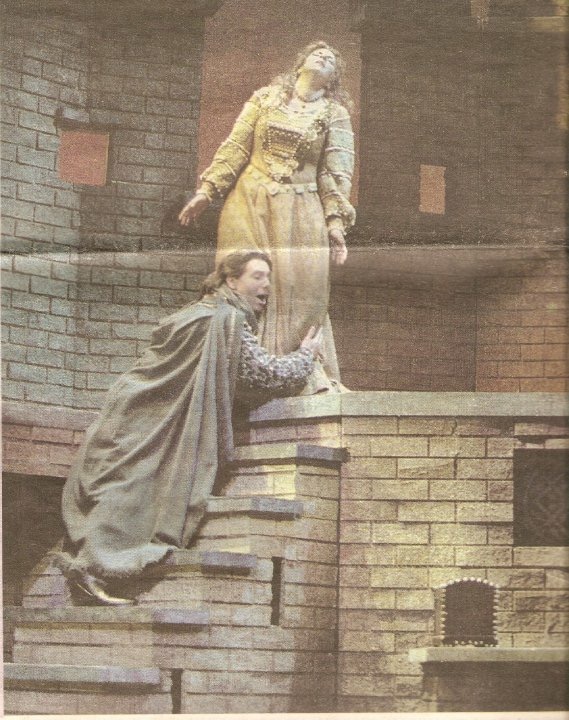
Memory submitted by Carol Ann Manzi:
"I sang five seasons as a principal artist at Sarasota Opera, in addition to many concerts. I even directed the youth opera one season. My experiences there were life-changing in so many ways. Sarasota Opera is an extraordinary company. The dedication to Opera and to community, past, present and future, is unsurpassed. Here is a photo of me from L'Amore dei Tre Re performing with tenor Daniel Cafiero."
Share your memories, thoughts, photos and videos from your experiences at the Sarasota Opera House over the years!
Photos and Resources
Our Centennial Media Archive offers a curated collection of historic photographs that capture the opera house’s rich legacy over the past 100 years. Explore rare images of landmark performances, architectural evolution, beloved artists, and memorable moments that shaped our cultural story. All assets are available for press use in high‑resolution formats. If you need assistance locating a specific photo or require additional archival materials, our communications team is here to help. Contact us at [email protected]
Support the Opera House