ARIADNE AUF NAXOS BACKGROUND NOTES
Music is a Holy Art
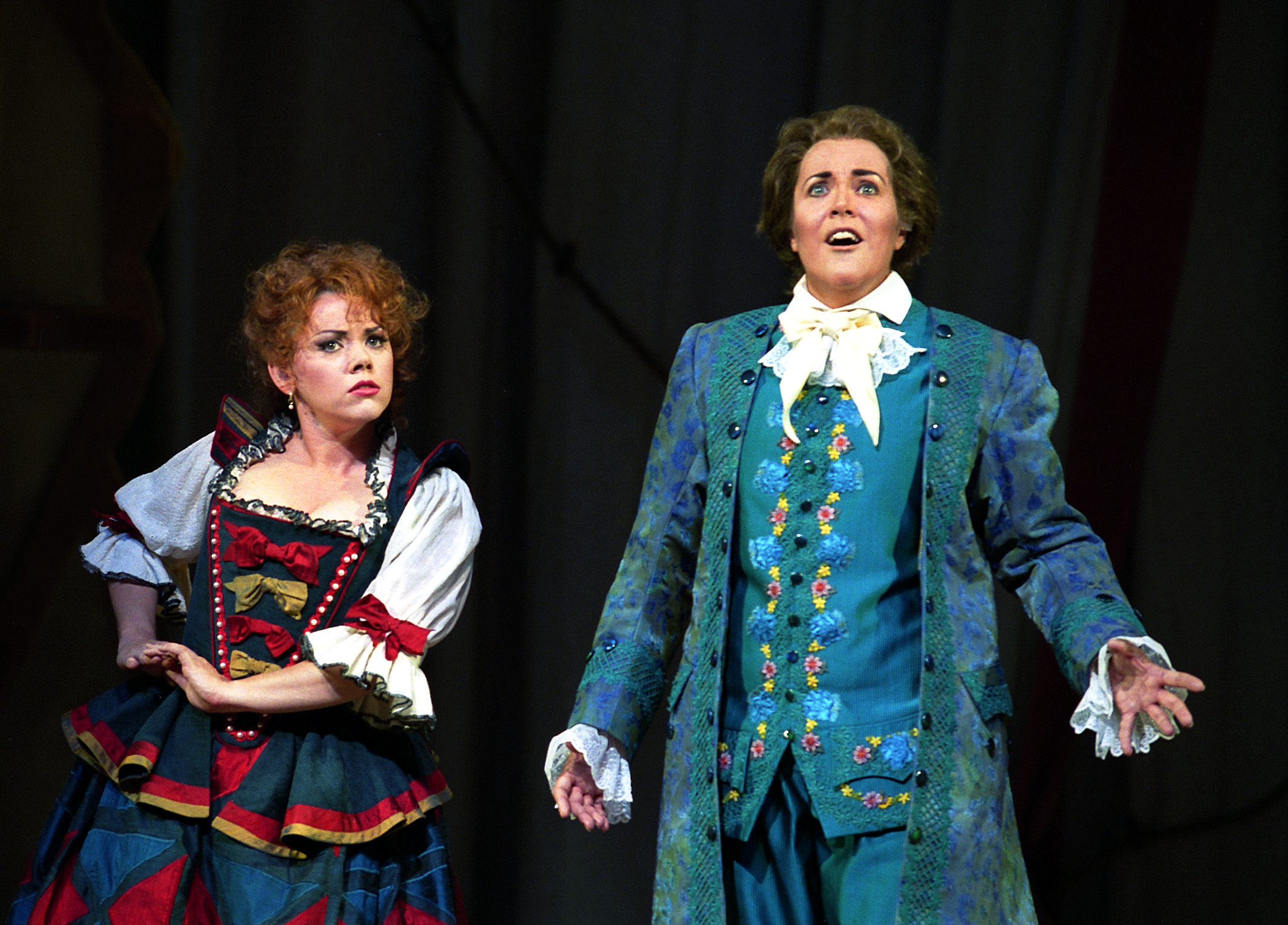
The second version of Ariadne auf Naxos (the version you are hearing at this performance) has one of those moments no music lover (even an opera hater) can resist. In the Prologue, the young composer becomes acquainted with the harsher realities of a life in the theater. But he is still intoxicated with that most magical elixir: music. "Music is a Holy Art," he cries, and he soars through two minutes of the most sublime music ever written in an opera.
There's a lot to be said about Richard Strauss, not all of it good, but even the narrowest mind must thrill to that moment. Ironically Strauss hated the idea of setting a character of a composer to music. When his collaborator, the great poet and playwright, Hugo von Hofmannsthal suggested it, Strauss wrote back (the two hardly ever met and didn't like one another): "I must tell you I hate all depictions of artists in works of fiction. I especially detest the idea of a composer on stage!"
He agreed only if a girl sang the young composer. Hofmannsthal thundered back: he hated the idea of girls pretending to be boys. The two men had already written Der Rosenkavalier, where the randy teenaged boy, Octavian, is indeed sung by a girl!
Not more than 14 days after they finished Der Rosenkavalier in 1910, Hofmannsthal was writing Strauss about the success of his adaptation of Sophocles' Oedipus Rex. But Strauss felt they had already done Elektra, Hofmannsthal's version of another Sophocles play. Earlier, Hofmannsthal had suggested Sermiramis by the Spanish playwright Calderon - it was about a licentious Assyrian Queen and was dotted with orgies. Strauss loved that idea. When he mentioned it, the poet replied he was tired of the "agony school."
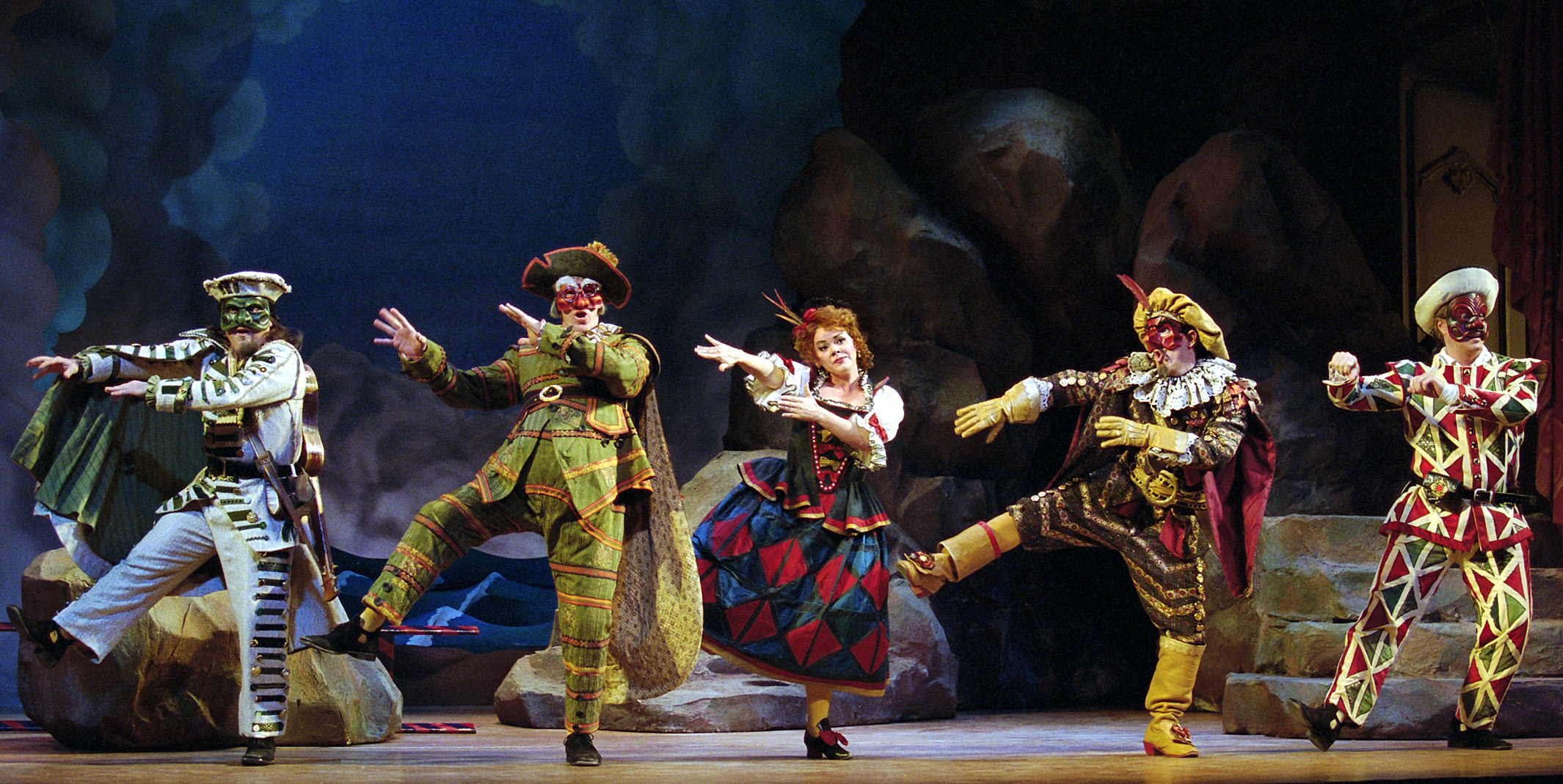
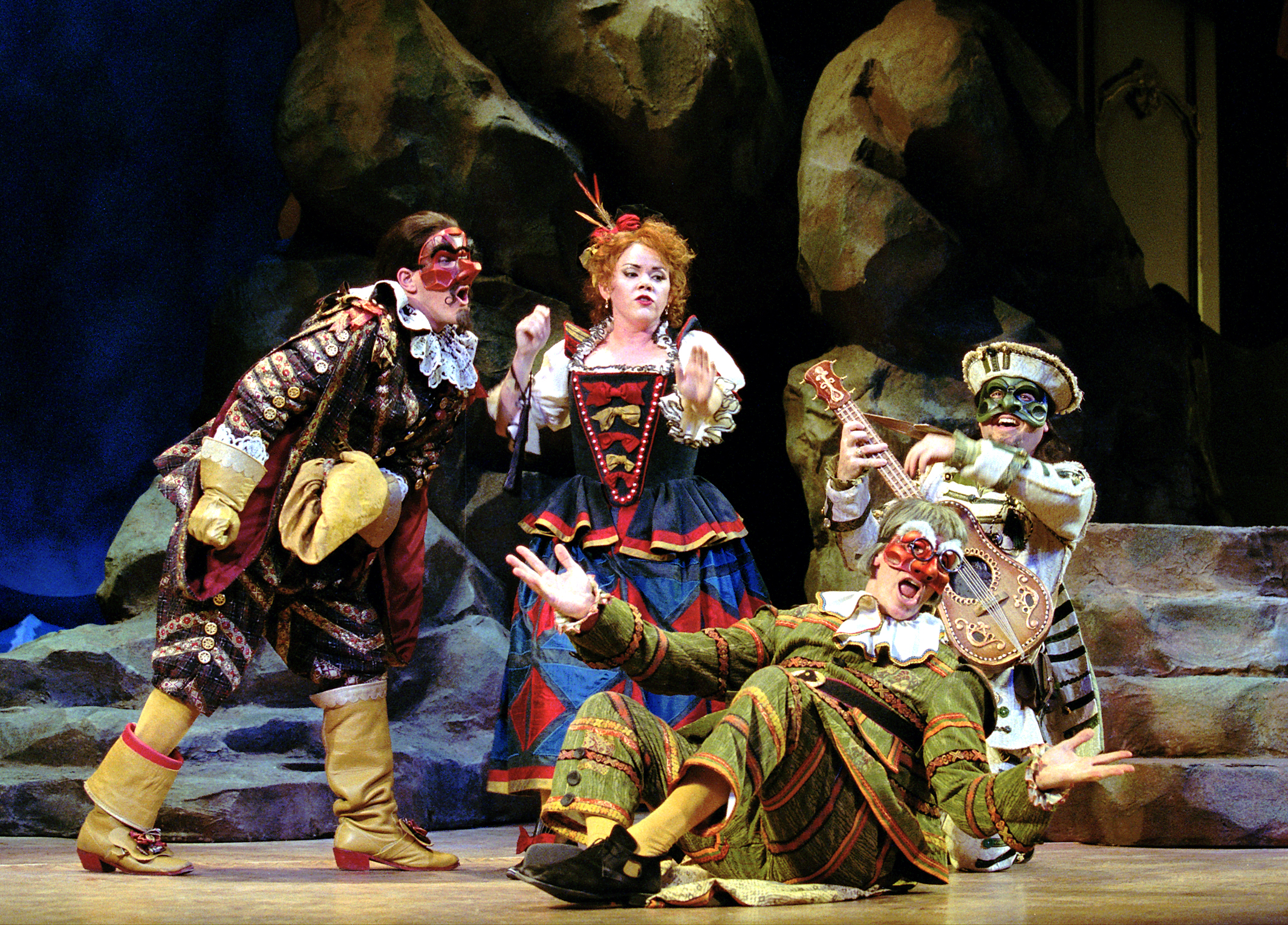
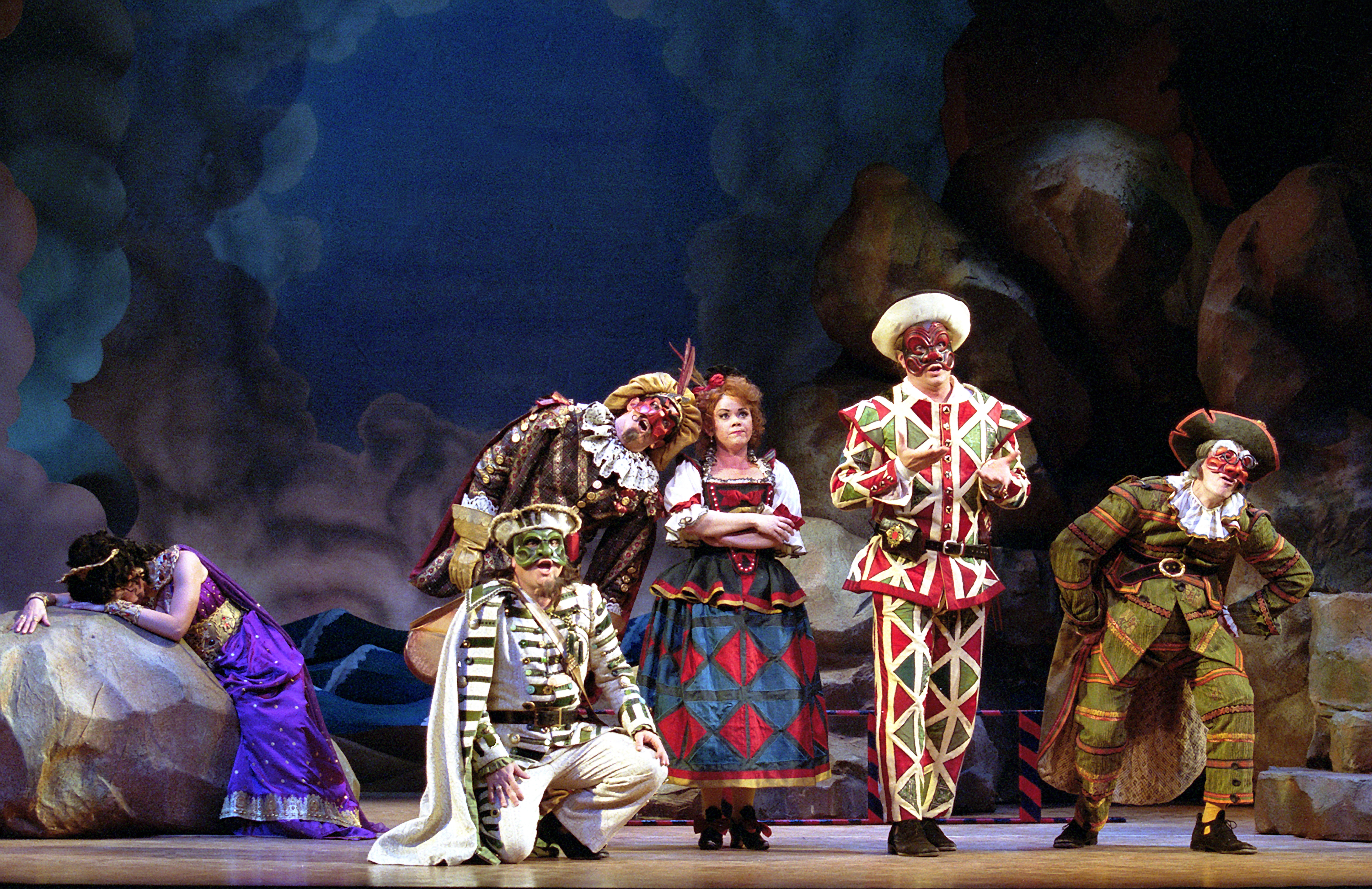
Hofmannsthal had always been obsessed by 18th- century French literature. That's where the idea for Rosenkavalier had come. In fact, the Italian tenor's aria, "Di rigori armato" in act one was taken from the Moliere play, Le Bourgeois Gentilhomme. Hofmannsthal had a vague idea about a 'serious’ opera company marooned in a castle during a storm. A commedia dell'arte troop (a bunch of clowns who sing) takes refuge there too. The two companies compete, disrupting the entertainments each puts on for their hostess, a rich heiress.
One day, in Paris, Hofmannsthal thought, why not do Le Bourgeois Gentilhomme with extensive incidental music by Strauss and follow it with a realization of the opera the pretentious bourgeois trying to be a gentleman, Monsieur Jordain, has commissioned?
Writing feverishly, Hofmannsthal decided the myth of Ariadne would be the subject of the opera, that in his version after she spends forty minutes longing for death, the god Bacchus would come along, and they would fall in love. Meanwhile, raiding the works of Moliere for characters, Hofmannsthal came up with the sexy minx Zerbinetta (from the play, Scapin). She'd remark (cynically) that all women long for death after a love affair, but only until the next hunk comes along!
He presented this to Strauss as their next work. Strauss wasn't happy but insisted on a long coloratura aria where Zerbinetta would detail her erotic conquests. Hofmannsthal hated the idea but wrote the text.
The first version was given in Stuttgart in 1912. No one got it. "The opera lovers had all fallen asleep by the time the opera started, the play-goers hated having the play stop for music," wrote Strauss.
This first version is a work of considerable sophistication, and it makes more sense than the more standard version. But it proved unwieldy. After all, it needed a full company of actors, as well as an opera company.
Strauss and Hofmannsthal began work on Die Frau ohne Schatten. That was finished in 1915. However with the First World War on there were no prospects for such a gigantic opera. Hofmannsthal suggested they go back to Ariadne, dropping the play entirely and substituting for it a short prologue, fully sung, with the composer as hero. That, he reasoned, could lead into the opera proper. Strauss, his eye as always on the box office saw there would be more opportunities for this than the enormous Frau and set to work.
The result is often dismissed as a compromise, since the prologue isn't really linked to the opera; the most winning character, the composer doesn't come back after the prologue, and the amusing backstage bits of the prologue aren’t mirrored in the opera, even though Zerbinetta and her troupe dutifully disrupt the serious goings-on.
But Strauss' workmanship is at its peak. He uses only 37 instrumentalists, including a pianist and harmonium player, creating small miracles of sonority and texture. His sharp musical characterizations in the Prologue are priceless, and this may be the last Strauss opera where the long soaring melodic lines of Ariadne's arias of abandonment, and her gradual submission to Bacchus in the final duet sound entirely spontaneous.
It is often said that the boy composer is based on Mozart, who perhaps didn't live long enough. Strauss, a Mozart at least in sheer facility, may have lived too long. Though he composed for another thirty years after this second Ariadne (given in 1916), this work already has the mark of old age: nostalgia. In its witty allusions to earlier composers (Schubert and Mendelssohn are quoted directly, Donizetti’s mad Lucia is sent up in Zerbinetta's endless sex aria), its self-parodies, its curious sweetness, its effortless mastery; it seems a radical's late work. The references backward extend to the plot - the "opera seria" (noble opera brought to its peak by the old Gluck and the young Mozart in Idomeneo), the "commedia" (a school at its peak in the 18th century).
Musically, Strauss abandoned the 'avant-garde style for which he was controversial (though only Elektra is apt to sound "modern" to our ears) for something innately conservative. It was a hard manner for Strauss to sustain as the years went on. But in Ariadne an immense talent is still in remarkable balance. The plot may take some unraveling but the whole is indeed a hymn to the ‘heilige Kunst', the holy art of music.
Albert Innaurato
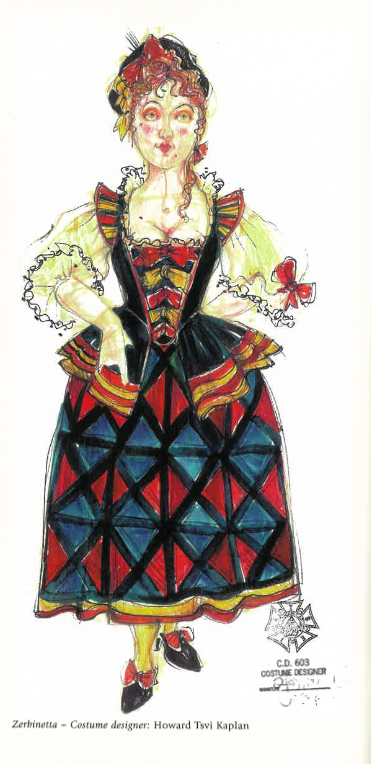
* Costume Sketch by Howard Tsvi Kaplan