JENŮFA BACKGROUND NOTES
Leoš Janáček was born on July 3, 1854, in the village of Hukvaldy in Moravia. Then belonging to the Austro-Hungarian Empire, Moravia is today part of the Czech Republic. The tenth of fourteen children, Janáček studied music in Brno (the principal city of Moravia), Prague, Leipzig, and Vienna. The folk songs and dances of his native Moravia fascinated the composer. He collected and analyzed these pieces, saving them for future generations. Janáček was already fifty years old when his third opera had its world premiere at Brno in 1904. The production was successful, but it brought him only local fame. Sharing the same title as the play on which it was based, the opera Její pastorkyňa (Her Stepdaughter) is today known as Jenůfa in the non-Czech world.
Janáček had worked on Jenůfa for a decade. Gabriela Preissová, the author of the play, at first thought her play would not make a suitable libretto, but the composer convinced her otherwise. The story seemed ready made for Janáček: it was a passionate story of contemporary Moravian peasants in which the characters could wear native costumes and sing music similar to Moravian folk songs. Importantly, Janáček did not want the text of Preissová’s play text turned into verse before he set it to music. He became one of the first composers to write an opera to a prose libretto.
Numerous factors contributed to Janáček’s inability to complete Jenůfa’s composition quickly. At this time, Janáček made his livelihood as choirmaster, organist, teacher, and school administrator, leaving him time only at night to compose. He took time to create other musical works and oversaw the publication of a huge 1,200-page folk song collection. In addition, Janáček’s one surviving child, Olga, was fatally ill and died at the age of twenty while he was completing the opera in 1903. The composer dedicated the opera to her and placed a sheet from its manuscript in her coffin.
The extended time it took Janáček to complete the score allowed him to find a personal voice as a composer. First, Janáček abandoned the idea of dividing his stage works into recognizable set numbers, such as duets and larger ensembles. There is a five-year gap in the composition of Jenůfa between Act I and Act II. Beginning with Act II, the monologue became an important structure in the organization of Janáček’s operas. Also during this period, Janáček’s theories of speech-melody became clear. Unlike his earlier compositions, the music that Janáček now wrote was in brief, pithy, and disjointed phrases. The composer followed the contours of realistic, casual speech. He listened closely to the rhythms and inflections of his native language and how emotions and other external forces influenced them. Janáček’s musical style was developing into one instantly recognizable.
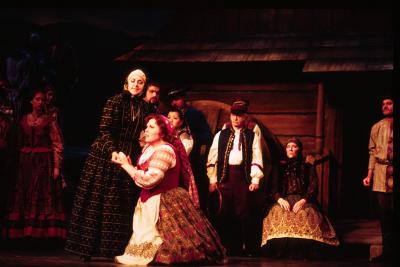
The Brno Opera followed the world premiere of Jenůfa with more performances in following seasons. For each revival, the composer made changes to the score. No other opera house, though, wanted to produce the work. More than anything else, Janáček hoped for a production at the National Theatre in Prague. However, Karel Kovařovic who ran the company had a vendetta against the composer. Janáček had savagely criticized Kovařovic’s comic opera The Bridegrooms in a review decades earlier. Kovařovic was not willing to forgive Janáček for this. Ultimately, friends of Kovařovic persuaded him to mount Janáček’s opera. Kovařovic insisted that the work needed revision, and undertook the doctoring himself. He made cuts in the opera, changed the orchestration, and reconceived the musical structure of the final scene between Laca and Jenůfa. In short, he smoothed out the edges of Janáček’s highly original music, making the opera more palatable to those who expected the sound of Richard Strauss and his Czech imitators. Janáček agreed to all of Kovařovic’s changes.
The first performance of Jenůfa in Prague conducted by Kovařovic occurred in 1916. Janáček was now sixty-two years old, and the production proved that he was the operatic heir to Smetana and Dvořák. The opera was a tremendous success. It traveled internationally, making its way in a German translation to Vienna, Cologne, Berlin, and, in 1924, the Metropolitan Opera in New York. All of these productions used Kovařovic’s version. In 1923, Janáček repudiated the changes that Kovařovic had made. However, it was too late: the publisher of Jenůfa issued it only in Kovařovic’s, and not Janáček’s, version.
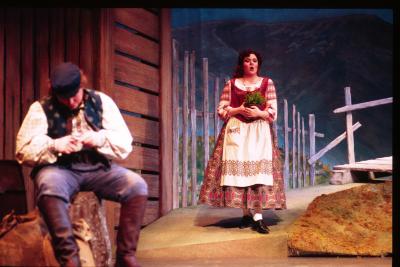
Janáček lived for another twelve years following the Prague premiere of Jenůfa. His later life saw him blossom as a composer, writing masterworks in all forms. Janáček’s operas alone ensure him a place as one of the greatest composers who has ever lived. He wrote numerous stage works after Jenůfa. Today, Káta Kabanová, The Cunning Little Vixen, and The Makropulos Affair are performed frequently around the world. Janáček’s posthumously premiered From the House of the Dead (based on a novel by Dostoyevsky) is also produced with some regularity. Two other operas, Fate and The Excursions of Mr. Brouček, are available on recordings and sometimes produced on stage. The composer died on August 12, 1928.
Jenůfa is the first opera by Leoš Janáček to be performed by Sarasota Opera. The company previously has staged two operas in the Czech language: The Bartered Bride and The Kiss, both by Bedřich Smetana. The edition of Jenůfa in use at Sarasota Opera is a critical edition incorporating the revisions made by Janáček following the world premiere and before the opera was amended by Kovařovic for the first performance in Prague.